


KNX for Hotels & Hospitality
KNX hotel automation gives hospitality operators a single, open-standard platform to deliver the right light and temperature the moment a guest arrives, whilst quietly cutting the cost of conditioning empty rooms.
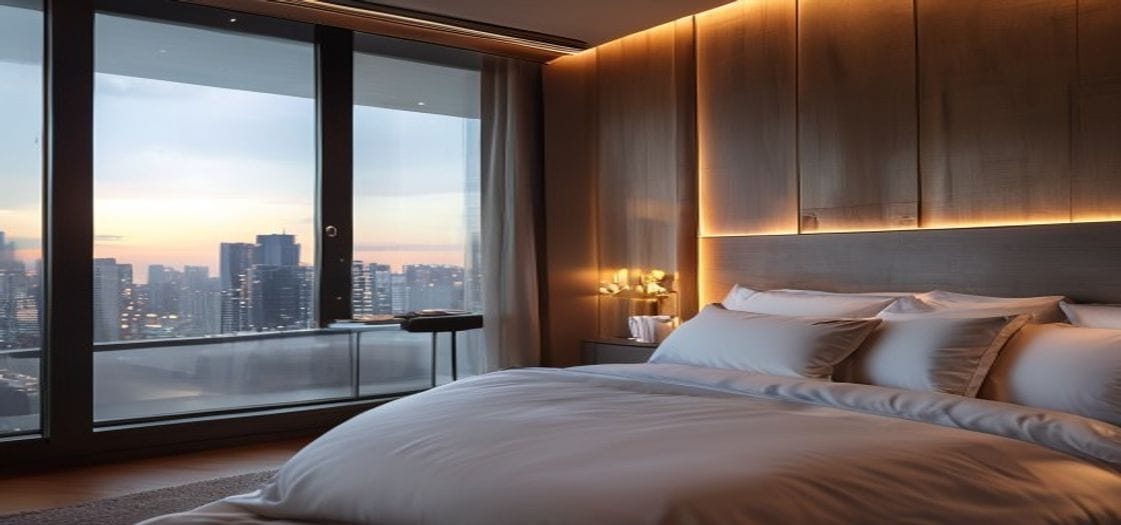
Think about the moment a tired guest finally opens their room door at midnight. The light should already be soft and welcoming, the temperature right, the blinds where they left them. Now think about that same room at 11am while the guest is out sightseeing — and a thermostat still cooling an empty space for hours. Those two moments are the whole business case for KNX for hotels. Good hotel room automation has to nail guest comfort and quietly defend your operating cost at the same time, and that’s exactly the tension KNX is built to resolve.
We design, program and commission hospitality projects with our own engineers, room by room. Built on the open KNX standard, the system links key-card access, lighting, climate, shading and services into one platform that scales just as happily from a twelve-room boutique to a property with several hundred keys — and never locks the operator into a single supplier for the next twenty years.
Why hospitality keeps specifying KNX
On a building meant to run for decades, being tied to one vendor is a real risk — for spares, for support, for the day that company changes its roadmap. An open standard takes that risk off the table: certified devices from every major manufacturer, full freedom to mix brands, and no re-engineering when you swap a part. It’s a proven backbone in hotels across the world, and it plugs into the systems you already run rather than replacing them.
- Open and durable — no proprietary trap, and a standard that outlives product generations.
- Repeatable at scale — perfect one room, then replicate that logic across every key.
- Connected, not siloed — your PMS, access control and building management all on one platform.
The guest never sees the technology — that’s the point
The room experience is the product, and it should feel like magic, not like operating a control panel. From the second the key card drops into the holder, the room wakes up:
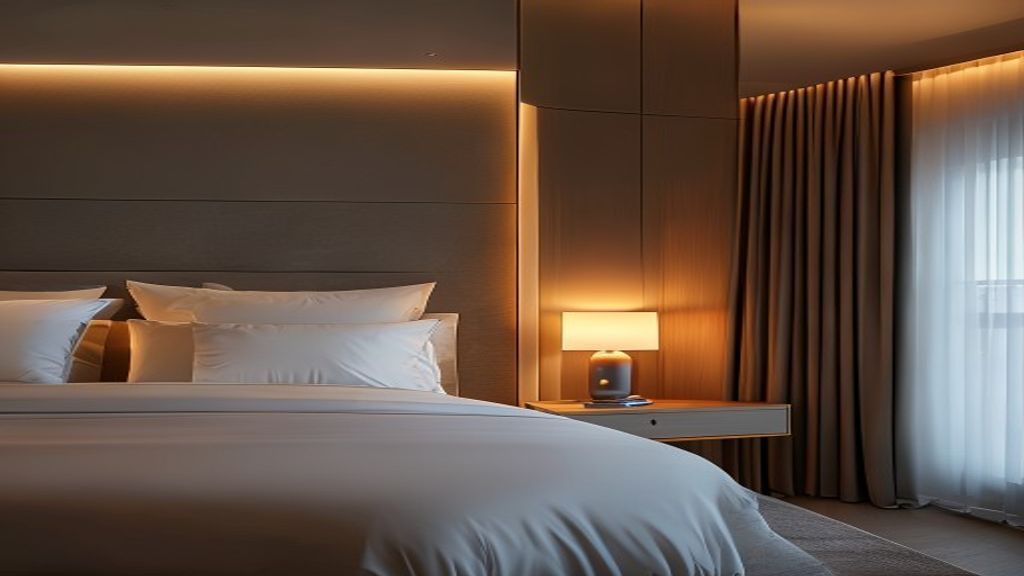
- Key-card power — lights and sockets come alive on entry and wind down gracefully on the way out.
- An arrival scene — entrance light, a comfortable setpoint and the blinds eased open.
- Bedside and door controls — a master off, a reading scene, plus “do not disturb” and “make up room” handled at the door.
- Climate that reads the room — full comfort when it’s occupied, automatic setback the moment it’s empty or a window opens.
- Shading on cue — motorised, scene-driven, glare and privacy taken care of without a fiddly remote.
Where the 30–40% saving actually comes from
Occupancy-driven heating, cooling and lighting is where a hotel claws back the most money. Rooms sit empty for a big chunk of every day, yet a conventional setup keeps conditioning them as if someone were always in. Tie climate to genuine occupancy and the key-card state, and an empty room slides into setback on its own — which usually trims room energy use by something like 30 to 40 percent. Across a full property that’s a direct, measurable drop in running cost, and it doesn’t depend on a single guest changing how they behave.
Two hundred rooms, two hundred smaller panels
A guest-room panel doesn’t look like much on its own. Multiply it by a couple of hundred keys and suddenly the hardware footprint is a budget line in its own right. Using integrated-relay actuators — where the switching relay lives inside the actuator instead of beside it — each room’s distribution shrinks, and the module count and cost drop on every single key. On a property-wide rollout, that small per-room win compounds into serious savings on materials, riser space and labour.
One managed building, not a stack of separate rooms
A KNX hotel isn’t a heap of isolated rooms — it’s one building you can actually see. We tie the guest rooms into the central building management system and front-of-house operations, so engineering watches faults, energy and room status from a single point, and the PMS can push check-in and check-out states straight into the rooms. Where the plant talks Modbus or BACnet, we bridge it onto KNX so HVAC, lighting and metering all report into one dashboard instead of a dozen.
Delivered room by room
- Consultancy and design — the room template, the energy strategy, the integration plan: smart home consultancy.
- ETS programming — one room perfected, then replicated across every key: KNX design and ETS programming.
- On-site commissioning — our engineers, floor by floor, wherever you are in Europe: KNX commissioning.
- Support for the live property — remote support and maintenance once the doors are open.
Operators and consultants: when you want to move, we mobilise to site. Request a quote or see the full picture in our KNX integration services.
Frequently asked questions
How much energy can a KNX hotel really save?
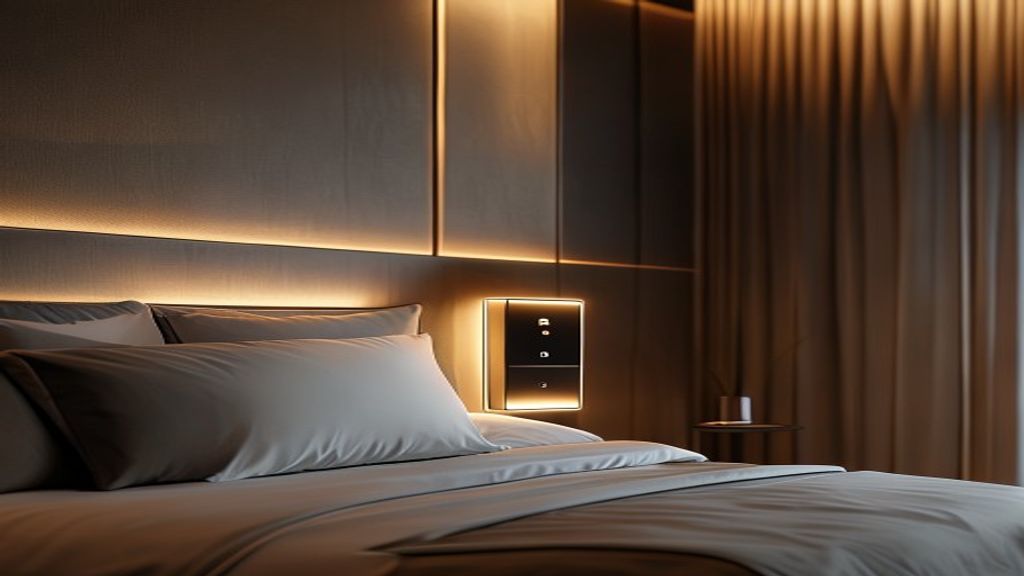
Linking HVAC and lighting to occupancy and the key card typically cuts guest-room energy by 30 to 40 percent. The exact number depends on your climate, occupancy patterns and plant, which we model for your specific property during design.
Will it work with our PMS and BMS?
Yes. We connect the guest rooms to the property management system for check-in and check-out states, and to the central BMS for monitoring, faults and energy — bridging Modbus or BACnet plant wherever it’s needed.
How does it cope across hundreds of rooms?
We perfect a single room as a template and replicate it across every key, so a 200-room property is consistent on the guest side and manageable on the engineering side, not 200 one-off builds.
Request a quote for your property — start with a sample room and roll it out from there.





