


KNX Climate & HVAC Control
A KNX thermostat does far more than adjust a single corridor temperature: it coordinates heating, cooling and ventilation room by room, turning a building’s climate into one energy-aware system rather than a collection of disconnected controls.
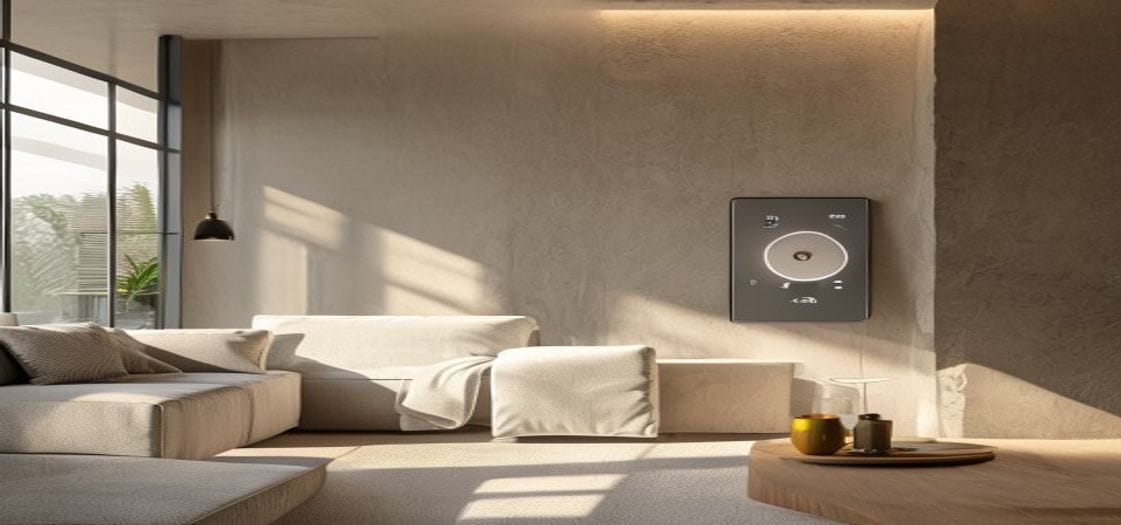
Most homes fight their own heating. One room is stuffy, the next is cold, the thermostat in the hallway is making decisions for bedrooms it has never been in, and the bill at the end of the month reflects all of it. KNX HVAC control fixes that by treating heating, cooling and ventilation as one coordinated, energy-aware system rather than a drawer full of disconnected thermostats. We design and commission KNX climate across Europe — room-by-room zoning, fan-coil and underfloor management, and tidy integration with the bigger plant over Modbus and BACnet — all on the open KNX standard so it sits happily alongside your lighting, shading and energy on the same bus.
Here is how we deliver comfort that feels effortless to the people in the building and reads as efficient to whoever pays for it.
Every room gets its own opinion
The building block of KNX heating control is the room thermostat — a wall unit or an integrated touch panel that measures temperature locally and sends a setpoint onto the bus. From there, actuators drive the valves, fan-coils or underfloor manifolds. Each room becomes its own zone with its own schedule and its own target, while the building as a whole stays coordinated. You nudge a setpoint; the system quietly handles the control loop, the valve modulation and the switch between heating and cooling.
- Per-room targets with local override and time schedules that match how each space is really used.
- Automatic heating/cooling changeover, handled zone by zone so nobody is fighting the season.
- Honest status feedback — panels and apps show the true valve position and mode, not a guess.
Stop heating empty rooms
KNX climate runs on operating modes — Comfort, Standby, Economy and a frost/heat protection mode — and the real money is saved when you link those modes to what the building already knows. Occupied rooms hold Comfort; empty ones quietly drop to Standby or Eco; open a window and the heating or cooling to that zone pauses on its own. The very same presence detectors that handle your lighting can feed the climate logic, so the house simply stops conditioning rooms nobody is in. No one touches a thermostat to make it happen.
Fast comfort and slow comfort, balanced
Different emitters move at different speeds, and we program both sides of that. Fan-coil units respond quickly — multi-speed fan control with 2- or 4-pipe valve management for living rooms and offices that need to react now. Underfloor heating is the opposite, all thermal lag and inertia, so we manage it with PWM valve control tuned to the slab so the floor stays warm without overshooting and roasting you an hour too late. Mixing the two under one roof is routine for us: fan-coil for a quick cool-down, underfloor for steady background warmth, both balanced from the same logic.
Talking to heat pumps, VRF and the rest of the plant
Serious projects almost always include kit that speaks its own language — heat pumps, VRF/VRV systems, air handling units, chillers, boilers. We bridge those to KNX with certified Modbus RTU/TCP and BACnet gateways, so the central plant and the room-level zones behave as one system instead of two that ignore each other. A VRF setup, for instance, can be driven per indoor unit straight from KNX thermostats while reporting its status back to the visualisation. This is where choosing your integrator matters: we have done enough of these gateways that multi-protocol HVAC is a known quantity for us, not a research project at your expense.
Fresh air, only when it is needed
Ventilation slots naturally into the same picture. CO2, humidity and VOC sensors on the bus drive demand-controlled ventilation — your MVHR ramps up when air quality or occupancy actually calls for it, and idles the rest of the time. You get healthy indoor air without paying to push maximum airflow around an empty house, and it ties into the same presence and scene logic running your lighting and blinds.
How we deliver your climate project
- Design — zoning plan, thermostat placement and gateway selection, built in ETS on proven templates.
- Programming — control loops, mode logic, the presence and window links, and the plant integration.
- Commissioning — every zone, valve and gateway verified on site by our teams across Europe.
- Handover — documented, labelled, explained, and backed by remote support for the inevitable seasonal fine-tuning.
For homeowners and developers, the system arrives comfortable from day one and you never have to think about the machinery underneath. For integrators, consultants and architects, you get the catalogue flexibility and the ETS templates to specify HVAC integration with confidence — and our own people doing the commissioning wherever the job is.
Want a climate setup that actually suits your building? Send us the details and we will take it from there.
Common questions about KNX climate
Can KNX control my existing heat pump or VRF system?
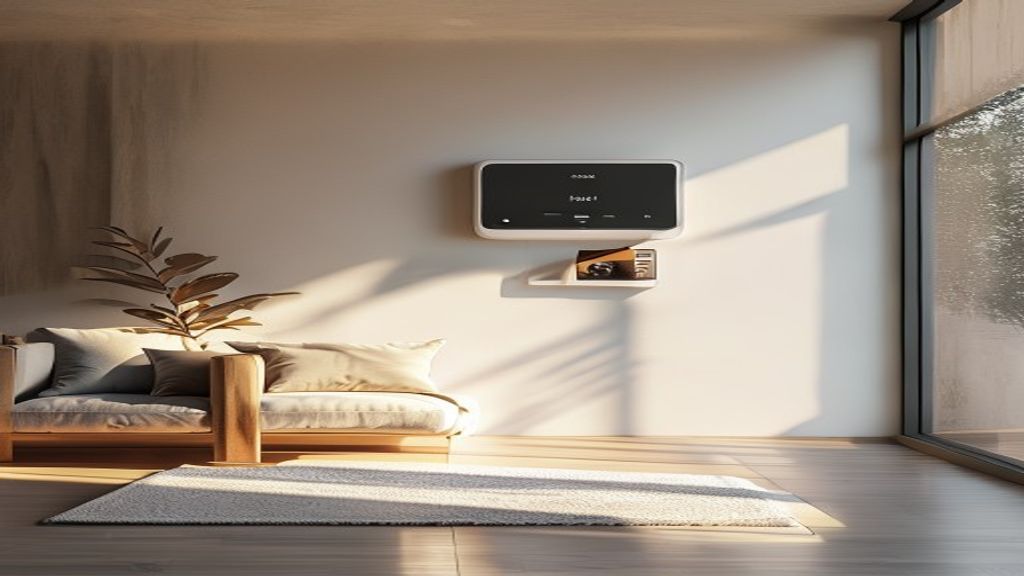
Usually it can. We connect heat pumps, VRF/VRV units and air handling units through certified Modbus or BACnet gateways, so your room thermostats drive the plant directly and the status comes back to your dashboard. We confirm the exact gateway during design so there are no surprises.
How does this actually lower my heating bill?
By only conditioning rooms when someone is in them. Presence detectors and window contacts move zones between Comfort and Eco automatically, and ventilation runs on demand rather than flat out — so you stop paying to heat empty or open rooms.
Can I have underfloor heating and fan-coils in the same home?
Yes, and it is a combination we build often. We tune the slow underfloor side and the fast fan-coil side separately, then balance them from one set of logic so each room gets the right kind of comfort.





