


Blog
KNX System Cost for Apartments: What to Expect as an Investment

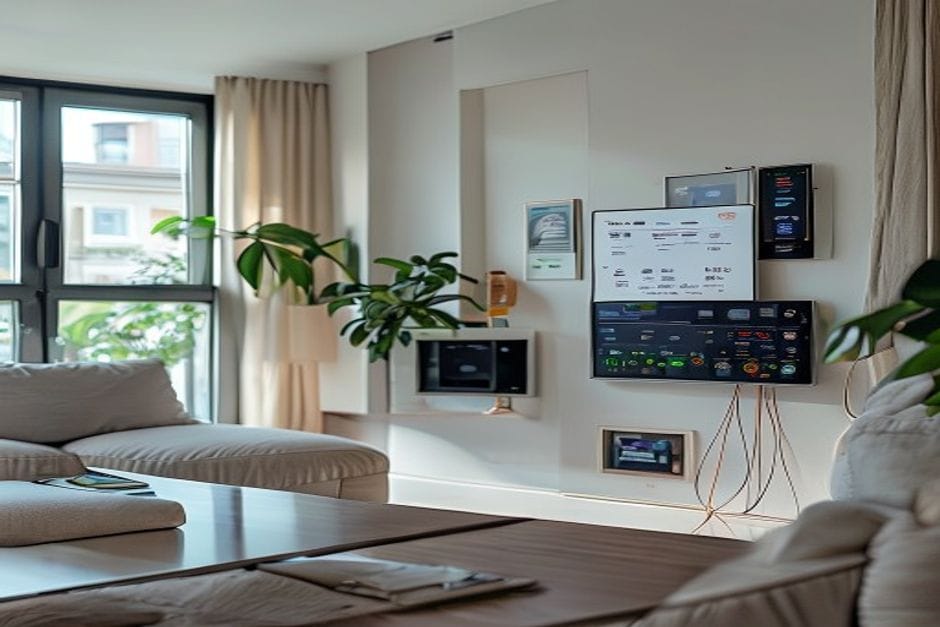
What Is a KNX System and How Does It Apply to an Apartment?
KNX is the international smart building standard (ISO 14543), recognised in over 190 countries. Think of it as a conventional electrical installation — but with one key difference: every component communicates over a dedicated KNX bus cable that carries all control data across the system.
Instead of a light switch wired directly to a luminaire, you have KNX actuators that execute commands and sensors that feed information back — giving you centralised, intelligent control. The bedroom light no longer depends solely on the switch by the door. It can be triggered from an app, a wall panel in the hallway, or automatically when you walk in. Every device speaks the same language.
One practical note worth knowing: KNX relays can be mounted directly inside the wall switch box rather than in the distribution board. The result is a cleaner installation, less cable, and faster fault-finding — the electrician knows exactly where to look without opening the whole board.
For a deeper look at how KNX compares to other platforms, see our guide on KNX vs Tuya vs Loxone, and for apartment-specific considerations, visit our KNX for Apartments page.
KNX System Cost for Apartments: Investment Levels and What You Get
Below are realistic budget ranges based on apartment size and automation scope. All figures are in EUR and reflect typical Western and Central European project costs.
Small Apartment (50–60 m²) — Entry Level
Investment: €3,000 – €4,500
This covers full lighting automation (6–8 circuits), a smart thermostat, two touch panels, and smartphone control. Functionally, it is equivalent to a standard electrical installation with smart capabilities layered on top. In practice, automated lighting management typically delivers 15–20% savings on electricity within the first year.
Mid-Size Apartment (70–90 m²) — Standard Package
Investment: €4,500 – €6,500
All entry-level features plus motorised blind control (4–6 motors), motion detectors for bathrooms and hallways, “Leaving Home” and “Good Morning” scenes, and centralised HVAC control. A real-world project on a 75 m² apartment showed energy savings of around €180 per year.
Larger Apartment (100 m²+) — Premium
Investment: €6,500 – €8,500
Full lighting and blind automation, multi-zone climate control, integrated audio, connected flood and smoke detectors, UPS backup, and a dedicated local server. At this level, the system manages the home largely without daily intervention.
Compared to a Wi-Fi or Zigbee installation, the upfront cost of KNX is typically 40–60% higher — but you avoid dependency on internet connectivity and devices dropping off the network. A KNX system commissioned today should perform identically in ten years, without updates that break your settings or cloud servers being discontinued.
The reason for the cost premium is simple: every KNX device is built to last 20+ years, carries CE certification, and conforms to ISO 14543. It is infrastructure, not a gadget.
For Professionals: Component Breakdown and Installation Costs
Architects
KNX design needs to happen alongside the electrical drawings — not after. A typical 80 m² apartment requires 12–15 lighting circuits, 6–8 smart outlets, and 3–4 climate zones. With relays mounted in switch boxes rather than on DIN rail, the distribution board footprint is around 30% smaller than a conventional actuator-based setup. Our KNX design and ETS programming service covers this from concept to commissioning.
Electrical Contractors
Labour costs for KNX run approximately 20–25% higher than a standard installation, primarily due to ETS programming time. For a three-bedroom apartment, expect roughly two days for physical installation and one day for programming and testing. Retrofit work on an occupied apartment can double the labour cost due to recabling constraints.
Indicative Equipment Breakdown (75 m² Apartment)
- Actuators and relays: €1,800 — approx. 40% of total
- Touch panels and sensors: €1,200 — approx. 25% of total
- Power supplies and bus cabling: €600 — approx. 15% of total
- ETS programming and configuration: €500 — approx. 10% of total
- Installation labour: €500 — approx. 10% of total
Timeline: 3–4 days in an empty apartment; 5–7 days for a retrofit with occupants in residence. Standard warranty: 2 years on hardware, 5 years on ETS programming.
If ongoing support matters to you, our KNX remote support and maintenance service keeps your system running smoothly after handover.
Why KNX Is Worth the Investment
The ISO 14543 standard guarantees interoperability across 500+ KNX manufacturers worldwide. If one brand exits the market, you can replace components with another — you are never locked into a dead ecosystem.
KNX installations commissioned in Germany fifteen years ago are still running perfectly on original hardware. Across multiple real-world projects, the investment typically pays back within 4–7 years through energy savings and increased property value.
Unlike Wi-Fi systems that often need replacing every 3–5 years, KNX requires no cloud subscriptions, no dependency on external servers, and no single point of failure at the router. You can mix actuators from MDT with panels from Jung and sensors from Dinuy — they all speak the same language, and you can swap brands gradually over time without rebuilding the installation.
For a broader look at how KNX compares on energy efficiency, see our KNX energy management page.
Common Questions
What happens if a component fails or I want to change something?
Every KNX device has a unique address and operates independently. If one actuator fails, the rest of the system continues working normally. Replacement is straightforward: swap the faulty unit, assign the same address to the new one, and the system recognises it. For significant configuration changes, any certified KNX integrator can pick up your project — you are not tied to the original installer.
Am I locked into one manufacturer?
No. KNX interoperability is guaranteed by ISO 14543. You can combine devices from different brands freely and replace individual components over time without touching the rest of the installation. Think of it like changing lightbulbs — the wiring stays, only the component changes.
Is KNX worth it for a small apartment of 40–50 m²?
The cost per square metre is higher at smaller scales, but the comfort and reliability benefits are identical. A studio or one-bedroom apartment automated with KNX typically falls in the €2,500 – €3,500 range, giving you full control over lighting, climate, and security from a single app. If you plan to live there long-term and want maximum comfort, it is a sound investment. For a short-term or temporary arrangement, a simpler Wi-Fi system may be the more practical choice. Our KNX FAQ covers many more questions like this.
Ready to Get a Precise Quote for Your Apartment?
Every apartment is different, and the numbers above are ranges — not fixed prices. The most reliable way to understand what a KNX system will cost for your specific layout and goals is to speak with an experienced integrator. Request a free consultation and we will work through your floor plan, automation priorities, and budget to give you a clear, personalised estimate — no obligation, no pressure.





