


Blog
Letour KNX Switches: A Familiar Switch, Just Smarter

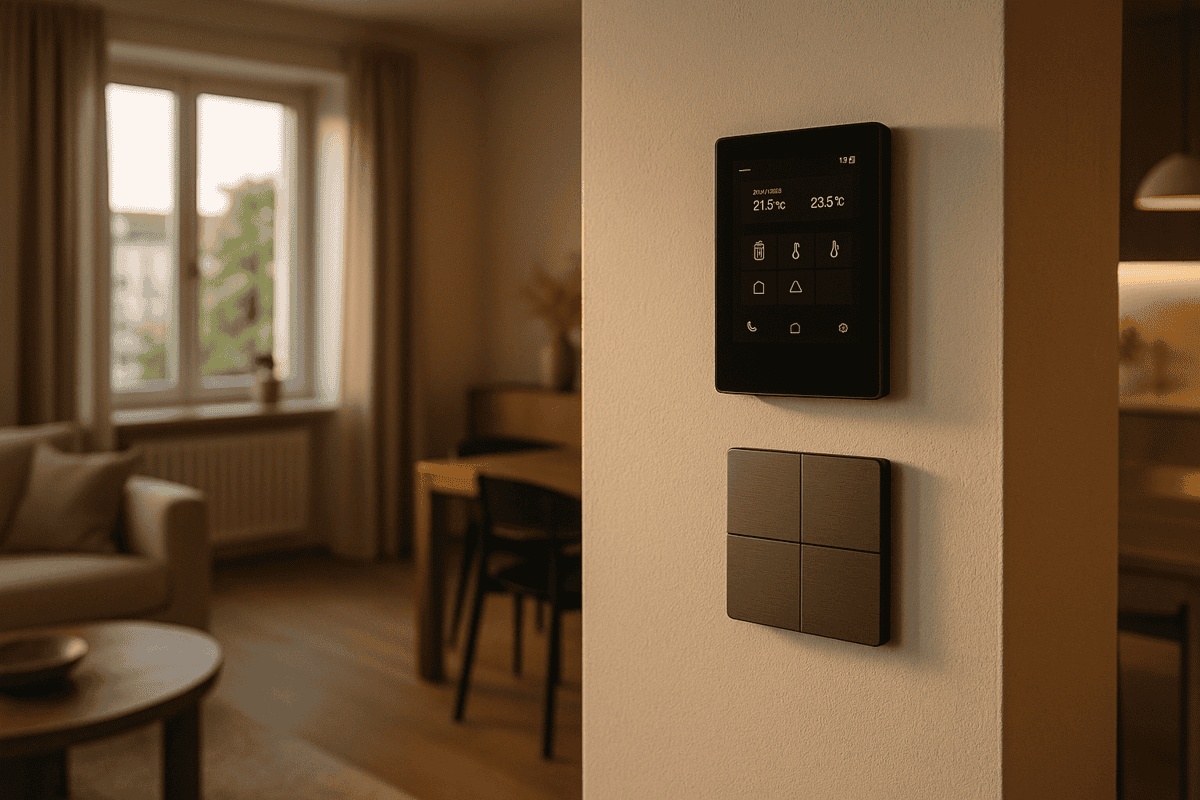
Letour KNX switches look like any standard wall switch. The difference is hidden behind the plate: the KNX relay — the component that actually executes the command — is built directly into the switch body, not mounted on a DIN rail in the consumer unit. That single design decision changes how a KNX installation is planned, wired, and maintained.
How a Letour KNX Switch Works
To understand the innovation, it helps to know the three terms you will hear most often in any KNX project:
- KNX bus: the dedicated two-wire cable (2×0.8 mm) that carries data between all devices on the system
- KNX relay: the component that receives a command from the bus and switches a circuit on or off
- KNX actuator: the technical term for a relay — the device that “acts” on the command
In a conventional KNX installation, all relays live inside the consumer unit, wired back to each switch position through many metres of cable. Letour moves that relay out of the consumer unit and places it directly behind the switch plate. The result is a system that is architecturally simpler without losing any of the functionality that makes KNX the preferred standard for professional smart-home integration.
What Changes Compared to a Standard KNX Setup
Significantly less cabling
In a 70 m² apartment with 15 lighting points, a conventional KNX layout typically requires around 180 metres of 3×1.5 mm² power cable running from the consumer unit to each switch position. With Letour, you only need to run the KNX bus cable — roughly 60 metres in the same flat. That is a reduction of around 120 metres, or 60–70% less copper in the walls.
A cleaner consumer unit
Instead of a DIN rail populated with 15–20 KNX relay modules, the consumer unit contains only the main supply, circuit breakers, and RCDs — exactly what a standard electrician would expect to see. The intelligence sits at each switch, not in a dedicated KNX cabinet.
Faster fault-finding
If a light stops working, the fault is localised immediately: it is either the switch in front of you or the circuit it controls. There is no need to work through a bank of 20 relay modules looking for the one that is not responding. A general electrician can identify and fix most faults in under 15 minutes, without specialist KNX knowledge.
What stays exactly the same
Full KNX capability: scenes, scheduled automation, smartphone control, integration with sensors, thermostats, and third-party KNX devices from any certified manufacturer. The wiring is simpler; the system’s feature set is identical. If you want to understand everything KNX ETS programming can do with a Letour-based layout, the answer is: everything a traditional setup can do.
Who Benefits from Letour KNX Switches
Homeowners
If your property is already finished, Letour is the most practical route to KNX. You replace existing switches with Letour units and run the bus cable — no major chasing or rewiring from the consumer unit. It is also a natural fit for apartments where the consumer unit is compact and space for additional DIN-rail modules is limited.
Architects and interior designers
A standard consumer unit remains standard. You can specify KNX for a premium project without reserving extra space for a dedicated KNX cabinet or compromising the aesthetics of the technical installation. For villas and high-end homes, this means smart-home capability with no visual compromise at the distribution board.
Electrical contractors
Physically, mounting a Letour switch is identical to fitting a conventional one — plus connecting two bus wires. No specialist KNX training is required for the installation phase. The relay is already integrated; commissioning and parameter assignment happen in ETS software, separately, by the KNX integrator.
Typical Process and Indicative Costs
A Letour-based project generally follows these steps:
- Initial consultation: Review of floor plans to determine the number of switch points and bus topology
- Detailed proposal: Equipment list, costs, and installation timeline — usually delivered within 24 hours
- Installation: Physical mounting of switches and bus cabling, typically completed in a single day for a standard apartment
- ETS commissioning and handover: Programming of all group addresses, scenes, and schedules, plus a walkthrough with the client
Indicative pricing starts from around €150 per point for a fully functional Letour switch including supply, installation, and programming. A three-bedroom apartment typically comes in lower than an equivalent conventional KNX layout, because savings on cabling and consumer-unit hardware offset the per-switch cost. For a tailored figure, see our project quotation page.
On reliability: Letour is a certified KNX Association manufacturer. KNX relay contacts are rated for over 100,000 switching operations — well above domestic demand. KNX itself is ISO standard 14543, supported by more than 500 manufacturers worldwide, which means the system is not tied to any single vendor’s ecosystem.
Frequently Asked Questions
Is it more expensive than conventional KNX?
Not necessarily. Savings on cable quantity (60–70% less), cable installation labour, and consumer-unit hardware typically bring the total project cost below a comparable traditional KNX layout. The per-switch price is higher, but the overall installed cost is often lower.
What happens if an integrated relay fails?
You replace the switch — just as you would in a conventional installation. The rest of the system is unaffected. A local electrician can swap the unit in around 15 minutes without opening the consumer unit or needing KNX-specific tools. Remote diagnostics can often confirm whether the issue is the device itself or a configuration point before anyone visits site.
Can the system be expanded later?
Yes. KNX is modular by design. Additional Letour switches connect to the same bus, and the system can be extended with KNX devices from any other certified manufacturer — Jung, MDT, Dinuy, and others. Interoperability is guaranteed by the ISO 14543 standard, not by proprietary agreements. Most clients add two or three points in the year after their initial installation once they see how the system behaves day-to-day.
Ready to Plan Your KNX Project?
Whether you are retrofitting a finished apartment or specifying KNX from the first architectural drawing, Letour switches are worth considering. Our team can review your floor plan, advise on the right topology, and handle everything from ETS design to final commissioning. Send us your project details and we will come back to you with a clear, no-obligation proposal.





